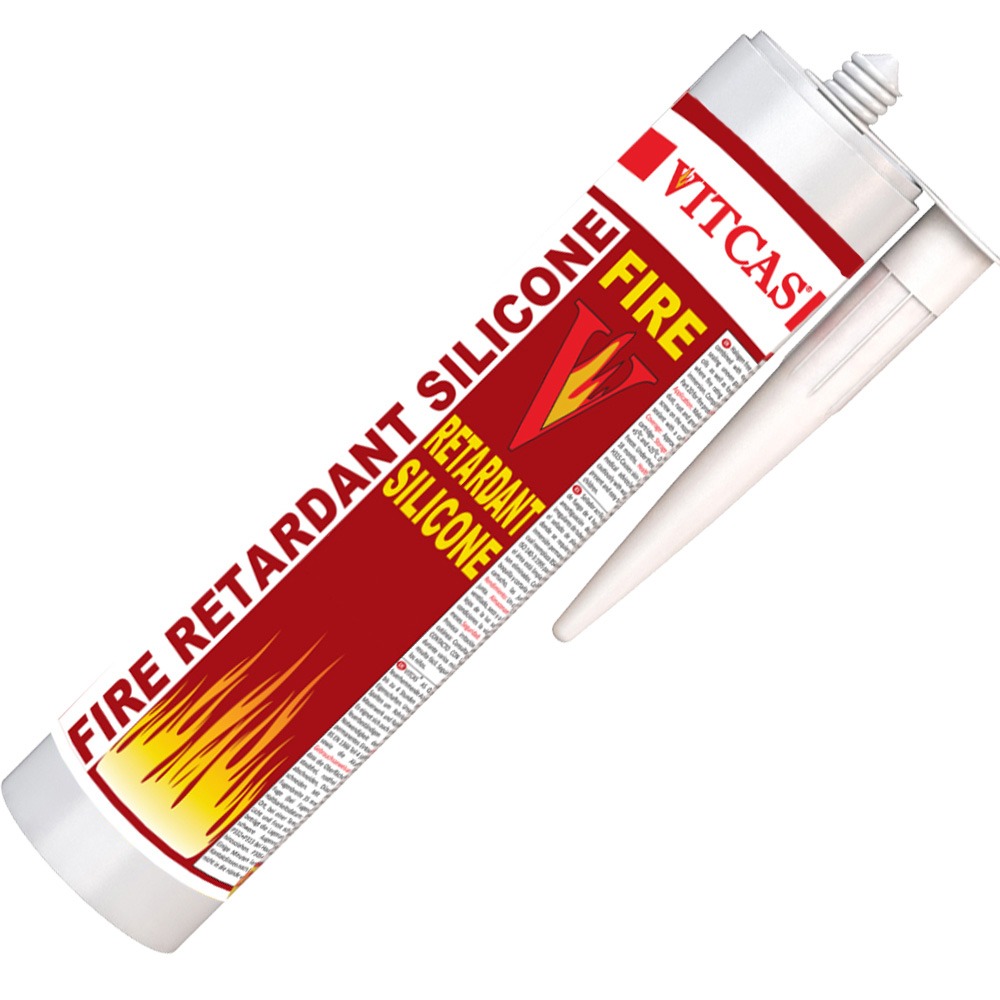
Two cartridges described as fire-resistant may have different properties and purposes. When choosing, the material of the sealant, the substrate, and the requirements of the entire joint are important. Start with the documentation of the protected location instead of comparing only the declared time from product headings.
Learn the type of each material
Fire Retardant Silicone is a Vitcas neutral-cure silicone with described applications in fire protection. Intumescent Acoustic Sealant is an acrylic compound that expands under the influence of temperature and also has described acoustic functions.
These features do not mean identical preparation and joint behaviour. Record the product range, intended substrates, and site conditions. For the acrylic compound, documentation excludes permanent immersion in water; moisture must be considered when selecting the solution.
Read the parameters for the specific system
The required fire resistance concerns the partition along with its details. The product data sheet should correspond to the documentation of the given configuration, including geometry and auxiliary materials. Do not assign the same class to any gap simply because the same cartridge is used.
Heat Resistant Silicone has separate applications in heat-resistant connections. The operating temperature of the product and the fire resistance of the system describe different properties. The choice should depend on the needs of the location, not on a higher individual number.
Maintain access and execution data
Before starting work, prepare surfaces and the required detail according to the proper documentation. Take into account the method of further finishing so that it does not change the operation of the protection. Record products, variants, and locations that will not be visible after covering.
Keep photos and sources of selection. During later changes in the installation, compare the configuration from the beginning. Previous use of one of the compounds does not automatically confirm a new service penetration with a different pipe, wall, or gap width.