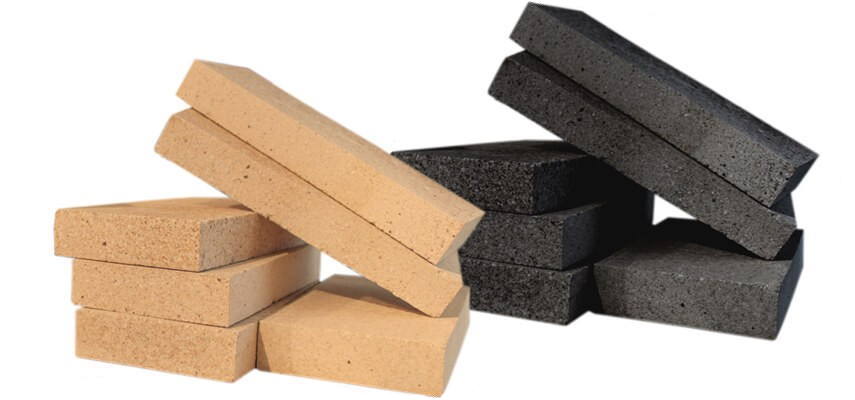
The garden fire pit ring defines the hot zone and remains exposed to precipitation. Its durability depends on support, proper connections, and drying capability. Choosing the brick colour is worth preceding with a cross-section sketch and checking surrounding conditions.
Lay out the inner and outer part
Show where the fuel will be placed and how close to the wall the embers will accumulate. Select firebricks for suitable contact with the hot zone. The outer casing, base, and any insulation have their own requirements, which are not described by the brick's resistance alone.
Check the stable foundation and water drainage path. Water should not remain in the lowest spot just because the ring appears closed. Also indicate the method for removing ash without resting the tool on a fragile edge.
Confirm the curvature with a fitting
Lay out a trial section of the ring and check the width of the joints on both sides. Wedge-shaped arch bricks have a defined profile; not every wedge creates any radius in the chosen direction. Verify the orientation of the element instead of relying solely on the term "arch".
If the project requires cuts, record their location and support. Avoid accidental small ends in a place that will be loaded. Calculate the number of bricks from the approved layout, separating full parts, cut pieces, and spare for repairs.
The top edge also needs a suitable detail
Consider Outdoor Oven Cement for compatible exterior joints. The selection includes the geometry and preparation of the bricks. Mortar does not replace protection or drainage if the top surface constantly directs water into the wall.
After execution, maintain the required curing and drying. Inspect the ring after the first rains and after the intended heating, once it cools again. Recording changes will help identify a single chip, displacement of an element, or a recurring water problem.